
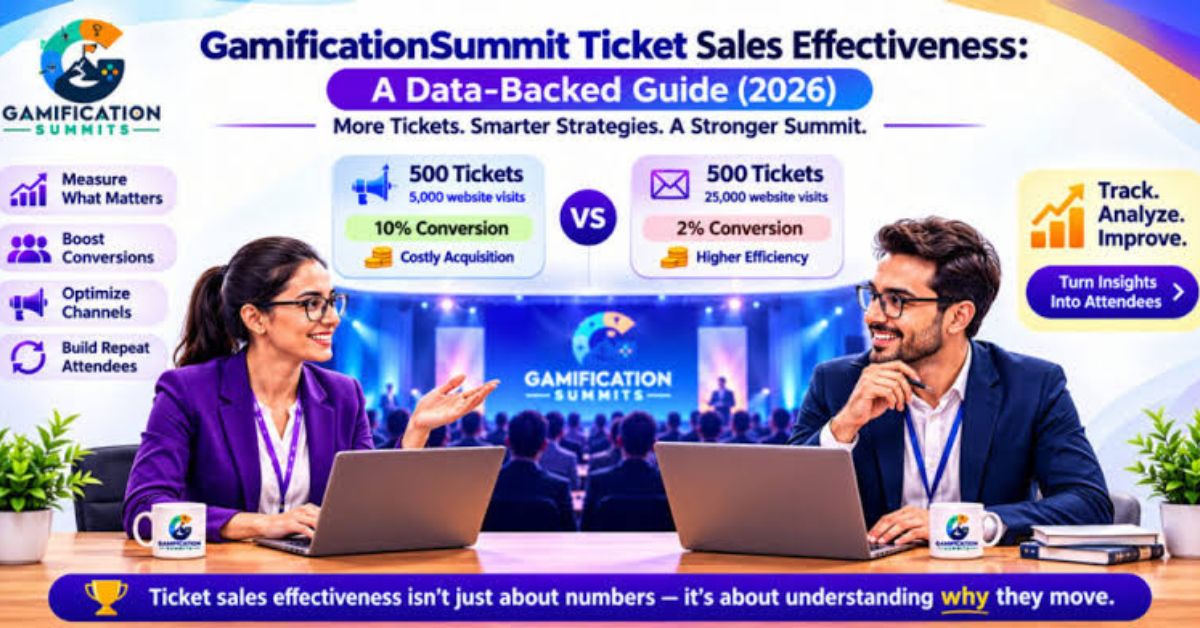

If you searched tickets 2021 websites for gamificationsummit, you may be trying to identify an old event page, registration website, or historical ticket reference.
The phrase is unusual because it combines a year, ticketing language, websites, and the name Gamification Summit.
This guide explains what the search phrase likely refers to without treating unverified online claims as established facts.
You will learn about the history of the Gamification Summit, the role of event websites, how online registration worked, and why old ticket pages can disappear.
You will also see how search intent affects this keyword.
Most importantly, this article separates documented history from later online claims.
Contemporary sources clearly document Gamification Summit events in 2011, while specific claims about a 2021 edition require more careful verification.
Biography Table
| Detail | Information |
| Subject | Gamification Summit |
| Search phrase | tickets 2021 websites for gamificationsummit |
| Main topic | Historical event websites and ticket research |
| Established event history | Documented from 2011 |
| First documented summit | January 20–21, 2011 |
| First documented location | San Francisco, California |
| Later 2011 event | New York City |
| Core subject | Gamification and engagement |
| Common industries | Marketing, education, technology, business, product design |
| 2021 status | Specific claims require independent verification |
| Current ticket availability | No genuine 2021 purchase should be expected |
| Research priority | Primary and contemporary sources |
The table gives useful context without turning uncertain information into fact.
The strongest historical records come from contemporary publications and event material rather than recent pages created years later.
What Does “Tickets 2021 Websites for GamificationSummit” Mean?
The phrase appears to combine several search ideas.
These include Gamification Summit tickets, 2021 event websites, registration pages, and historical ticket information.
It does not necessarily represent an official event title.
A person searching the phrase may want to locate an old ticket page, check whether a website was legitimate, research event history, or understand how registration worked.
That distinction matters because search engines often connect related words even when they were not used together as an official name.
Understanding the Gamification Summit Concept
The Gamification Summit was associated with the growing business interest in applying game mechanics outside traditional games.
The first documented summit was scheduled for January 20–21, 2011, at San Francisco’s Mission Bay Conference Center. Contemporary coverage described its focus as using game-like systems to encourage participation in non-gaming activities.
The event brought together people interested in engagement science, product design, marketing, and behavioral strategies.
Later 2011 coverage also documented a New York City summit focused on gamification, engagement, and business applications.
Why 2021 Is Important to the Phrase
The year 2021 changes the search from general event history to a specific historical period.
However, readers should be careful with claims about a Gamification Summit specifically held in 2021.
Several websites published in 2025 and 2026 claim a 2021 summit and provide dates, ticket information, or virtual-event details.
Those later claims do not automatically provide independent proof.
For responsible research, treat specific 2021 details as reported information unless contemporary records confirm them.
The Importance of Event Websites
Event websites usually act as the central information point for a conference.
They can contain dates, speakers, schedules, registration instructions, ticket types, venue information, and contact details.
For historical research, those pages become more than promotional material.
They can help reconstruct how an event was presented to its audience at a particular time.
How Online Event Ticketing Worked Around 2021
By 2021, online ticketing was already normal for professional conferences.
A typical registration process involved choosing an event, selecting an admission type, entering attendee information, paying through an online checkout, and receiving confirmation.
Virtual and hybrid events also made digital registration more important.
However, the exact ticketing process for a particular Gamification Summit should not be assumed without reliable archived evidence.
Finding the Event
The first step was identifying the correct event.
A search could return official pages, news articles, social profiles, ticket platforms, directories, and unrelated websites using similar terminology.
That creates a verification problem.
Researchers should compare the event name, organizer, dates, location, speakers, and domain before trusting a result.
Reviewing Event Details
Once a possible event page is found, review its basic details.
Check whether the page identifies an organizer, event date, location, agenda, speakers, and registration method.
A professional event page normally provides enough information for a visitor to understand what is being offered.
Missing information does not automatically prove fraud, but it should reduce confidence.
Selecting Registration
Registration normally required an attendee to choose an available admission option.
For conferences, this might include general admission, workshops, group registration, or other access levels.
However, specific Gamification Summit 2021 ticket categories should not be presented as confirmed unless supported by a reliable historical source.
Completing Payment
Online event payments usually required personal and billing information.
A legitimate checkout should clearly identify the merchant, total cost, payment method, and relevant terms.
For historical research, payment details can also help establish whether an old page genuinely operated as a ticket portal.
Screenshots, receipts, emails, and archived checkout pages can be valuable evidence.
Receiving Confirmation
After successful registration, attendees typically received a confirmation message.
That message could include an order number, attendee details, event information, or instructions for accessing the event.
For an old event, confirmation emails are especially useful because they can provide stronger evidence than a current webpage created years later.
Why People Search for Old Ticket Websites
People rarely search old ticket websites for only one reason.
They may be checking a purchase, researching an event, investigating a domain, writing an article, or trying to understand an organization’s history.
The phrase can therefore have several overlapping meanings.
Recognizing those meanings helps explain why such a long-tail keyword exists.
Historical Research
Historical researchers may use old ticket pages to reconstruct events.
Registration pages can reveal dates, prices, audience types, speakers, locations, and promotional language.
Archived pages can also show how event organizers presented their brands before websites were redesigned.
This makes ticket information useful historical evidence when it can be independently authenticated.
Professional Research
Business professionals may study past conferences to understand industry development.
A Gamification Summit page can show which topics attracted attention at a particular point in the technology and marketing cycle.
Researchers can compare older themes with modern product engagement, loyalty programs, learning platforms, and user experience strategies.
Citation and Verification
A strong citation should lead to evidence that directly supports the claim being made.
A recent article saying an old event happened is weaker than a contemporary event announcement, archived organizer page, or reputable publication from the same period.
This is especially important for tickets 2021 websites for gamificationsummit because current search results contain conflicting levels of evidence.
Digital Archiving
Digital archiving helps preserve websites after events end.
Archived pages may retain event schedules, registration details, speaker information, and promotional material.
However, archives can be incomplete.
An archived page should therefore be compared with other records when the claim is important.
Personal Records
Attendees may search old ticket websites because they need their own records.
They could be looking for receipts, registration confirmations, invoices, or proof of attendance.
Email accounts and payment statements may sometimes provide stronger evidence than a website that has since changed.
Gamification Before 2021
Gamification became a prominent business topic well before 2021.
Contemporary 2011 reporting discussed points, badges, levels, challenges, rewards, and engagement as emerging tools for non-game experiences.
The Gamification Summit reflected that growing interest.
Early events focused on how game mechanics could influence marketing, product development, customer engagement, and behavior.
The Business Case for Gamification
Businesses became interested in gamification because engagement can affect important outcomes.
Examples include participation, retention, learning, loyalty, and task completion.
The strategy is not simply about adding colorful badges.
Good gamification connects mechanics with a clear user goal and measurable business or learning outcome.
What Could a Gamification Summit Discuss?
A gamification conference could cover game mechanics, behavioral design, customer loyalty, workplace motivation, education, product strategy, and digital engagement.
The documented 2011 summit included speakers and sessions connected with engagement, marketing, product design, and real-world applications.
That broad subject range explains why professionals from different industries could have an interest in the event.
Gamification in Education
Education is a natural application for gamification.
Teachers and learning platforms can use progress indicators, challenges, feedback, badges, and achievement systems to encourage participation.
The key is design quality.
Rewards should support learning rather than distract students from the actual educational goal.
Workplace Gamification
Companies can also apply game mechanics to workplace systems.
Possible uses include employee training, onboarding, performance feedback, learning programs, and internal challenges.
However, workplace gamification should respect employees’ autonomy.
Poorly designed reward systems can create pressure instead of meaningful engagement.
Customer Engagement
Marketing teams often use gamification to encourage customer participation.
Loyalty points, progress bars, challenges, referral systems, and rewards are common examples.
The underlying goal is usually to make an ordinary customer journey more interactive.
A successful system still needs a clear reason for customers to participate.
User Experience
Gamification and UX design often overlap.
A well-designed interface can make progress easy to understand while giving users meaningful feedback.
The best systems do not force users to interact with unnecessary game mechanics.
Instead, the mechanics support the task.
Behavioral Design
Behavioral design examines how environments influence actions.
Gamification can use feedback, goals, challenges, rewards, and visible progress to encourage certain behaviors.
The ethical question is important.
Designers should consider whether users understand the system and whether the incentives serve their interests.
The Role of Tickets in Professional Events
Tickets are more than payment records.
They define access and can document who registered for an event.
Ticket systems also create operational data for organizers.
For historical researchers, those same records can become useful evidence about how professional events were structured.
Physical Versus Virtual Attendance
Physical events require venue access, seating, badges, check-in, and often travel.
Virtual events replace many of those steps with login credentials, digital schedules, streaming platforms, and online networking.
The difference became especially important during the broader shift toward remote events.
However, the exact format of a claimed 2021 Gamification Summit should be verified independently.
Why Historical Event Websites Can Disappear
Websites disappear for many ordinary reasons.
Domains expire, organizations change platforms, event pages are removed, and old registration systems are replaced.
A missing page does not necessarily mean an event never happened.
Likewise, a surviving page does not automatically prove that every statement on it is accurate.
Search Intent Behind the Keyword
The keyword has unusually mixed search intent.
Someone may want a website, historical information, ticket details, or proof that a particular page was legitimate.
Understanding these intentions makes the phrase easier to analyze.
It also explains why a useful article should cover both the event and its digital footprint.
Navigational Intent
Navigational searchers usually want to reach a specific website.
They may type a long phrase because they remember part of a domain or event name.
For these users, domain verification matters more than general gamification theory.
The safest approach is to identify the organization behind the site before assuming it is official.
Informational Intent
Informational users want an explanation.
They may ask what the phrase means, what Gamification Summit was, or why 2021 appears in the search.
For them, historical context and terminology are more useful than checkout instructions.
Historical Intent
Historical intent is particularly relevant now.
A 2021 ticket is no longer a normal current purchase.
The search is more likely to involve archives, old websites, prices, registration records, or event history.
That changes how the keyword should be interpreted.
Commercial Intent
Commercial intent means the searcher may be comparing ticket options or sellers.
That intent makes sense for a live event.
For a completed event year, however, any current seller claiming to offer an old ticket deserves careful scrutiny.
Verification Intent
Verification intent is about trust.
A user may want to know whether a website was official, whether a ticket seller was authorized, or whether an old event claim is credible.
This requires evidence rather than confident wording.
Why Long-Tail Keywords Matter
Long-tail keywords often reveal a specific question.
The phrase tickets 2021 websites for gamificationsummit contains several clues about what the searcher wants.
It combines event identity, ticketing, websites, and a historical year.
That makes it more specific than simply searching for Gamification Summit.
Researching a Historical Event Responsibly
Start with contemporary sources.
Look for organizer announcements, established publications, archived pages, event programs, speaker records, and reputable industry coverage.
Then compare the information across sources.
Do not treat repetition across several recently published websites as independent confirmation.
The Digital Footprint of a Summit
A summit can leave many digital traces.
These may include event pages, press releases, speaker bios, newsletters, social posts, videos, ticket confirmations, and archived schedules.
The strongest research combines several types of evidence.
One webpage rarely tells the entire story.
Why Gamification Conferences Attract Multiple Industries
Gamification crosses industry boundaries.
Marketing teams use engagement mechanics.
Educators use motivation and progress systems.
Product teams study retention.
Human resources teams examine training and participation.
That broad application explains why gamification conferences historically attracted varied professional audiences.
The Evolution of Event Discovery
Event discovery has changed significantly.
Earlier conferences relied heavily on direct websites, email lists, industry publications, and event directories.
Later, social media and large ticket platforms became major discovery channels.
Today, search engines and AI systems can surface old pages long after their original purpose has ended.
The Relationship Between Gamification and Digital Marketing
Digital marketing and gamification share a focus on user behavior.
Marketing teams want people to click, return, subscribe, purchase, or participate.
Gamification can introduce progress, rewards, challenges, and feedback into those experiences.
The technique works best when the mechanics support a genuine user benefit.
Gamification and User Motivation
Motivation is central to gamification.
Some systems rely on visible progress or achievement.
Others use social recognition, competition, collaboration, or rewards.
Early Gamification Summit coverage showed how designers and researchers were debating the difference between meaningful engagement and simply adding game-like features.
What Makes a Good Event Website?
A strong event website should answer basic questions quickly.
It should clearly identify the organizer, event name, date, location or format, agenda, speakers, registration process, and contact information.
Payment pages should also explain costs and terms.
These details help users distinguish professional event infrastructure from vague promotional pages.
Ticket Information as Historical Evidence
Ticket information can reveal how an event was marketed.
Prices may show audience segmentation.
Admission categories can reveal event structure.
Registration requirements can demonstrate whether an event was designed for consumers, professionals, students, or specialized groups.
Still, ticket evidence should be checked against independent records.
Common Misunderstandings About the Keyword
The phrase can easily be misunderstood because it looks like a formal title.
It is better viewed as a search query combining several concepts.
The wording does not establish that every website appearing in search results is connected to the original event.
It May Not Be a Website Name
Tickets 2021 Websites for GamificationSummit does not necessarily identify a domain.
Search engines often combine multiple concepts into a query.
A page ranking for the phrase may be an article about ticket websites rather than the actual ticket website itself.
It May Not Be an Official Event Title
The phrase should not automatically be treated as the official name of an event.
Historical records describe the event as the Gamification Summit or GSummit.
Contemporary coverage from 2011 used those names when documenting the San Francisco and New York events.
It Does Not Automatically Identify a Ticket Provider
Mentioning a ticket platform in an article does not prove that the platform officially sold tickets.
An authorized relationship requires evidence.
That could include an organizer announcement, archived event page, verified event listing, or other reliable documentation.
It Does Not Guarantee Current Availability
A webpage discussing 2021 tickets does not mean tickets are available today.
2021 is a completed year.
If a site currently asks for payment for an old event ticket, investigate the page carefully before providing financial or personal information.
It Does Not Prove Ownership
A domain containing the words Gamification Summit does not automatically prove ownership by the event organizer.
Domain names can be registered by unrelated parties.
Researchers should look for consistent organizational information, historical records, contact details, and independent references before drawing conclusions.
FAQs
What does tickets 2021 websites for gamificationsummit mean?
It is a long-tail search phrase concerning Gamification Summit ticket information, websites, registration pages, and historical records associated with 2021.
Was the Gamification Summit a real event?
Yes. Contemporary sources clearly document Gamification Summit events beginning in 2011, including the first San Francisco summit and a later New York event.
Was there definitely a Gamification Summit in 2021?
Several newer webpages claim a 2021 edition, but those specific claims should be independently verified rather than accepted solely because multiple recent sites repeat them.
Can I still buy a Gamification Summit 2021 ticket?
A legitimate 2021 ticket should not be expected as a current event purchase. Be cautious with websites requesting payment for a completed event year.
How can I verify an old Gamification Summit ticket website?
Check contemporary sources, archived event pages, organizer information, domain history, payment records, and independent publications. Avoid relying on one recent article as proof.
Conclusion
The phrase tickets 2021 websites for gamificationsummit is best understood as a historical and informational search query.
It connects ticket research with the broader history of the Gamification Summit and its online presence.
The summit itself has a well-documented history dating to 2011, when contemporary sources described events in San Francisco and New York focused on game mechanics, engagement, and business applications.
Specific claims about a 2021 edition require more caution because many detailed references appeared years later.
For trustworthy research, compare primary records with reputable contemporary reporting.
Most importantly, never assume that an old ticket page is an official seller simply because its domain contains the event name.

SEO specialist and content creator with 4 years of experience in search engine optimization, keyword research, and digital publishing. Passionate about creating high-quality, user-focused, and trending content for JournelTrends.com while helping readers discover valuable information online.
